Reactor Char Discharge
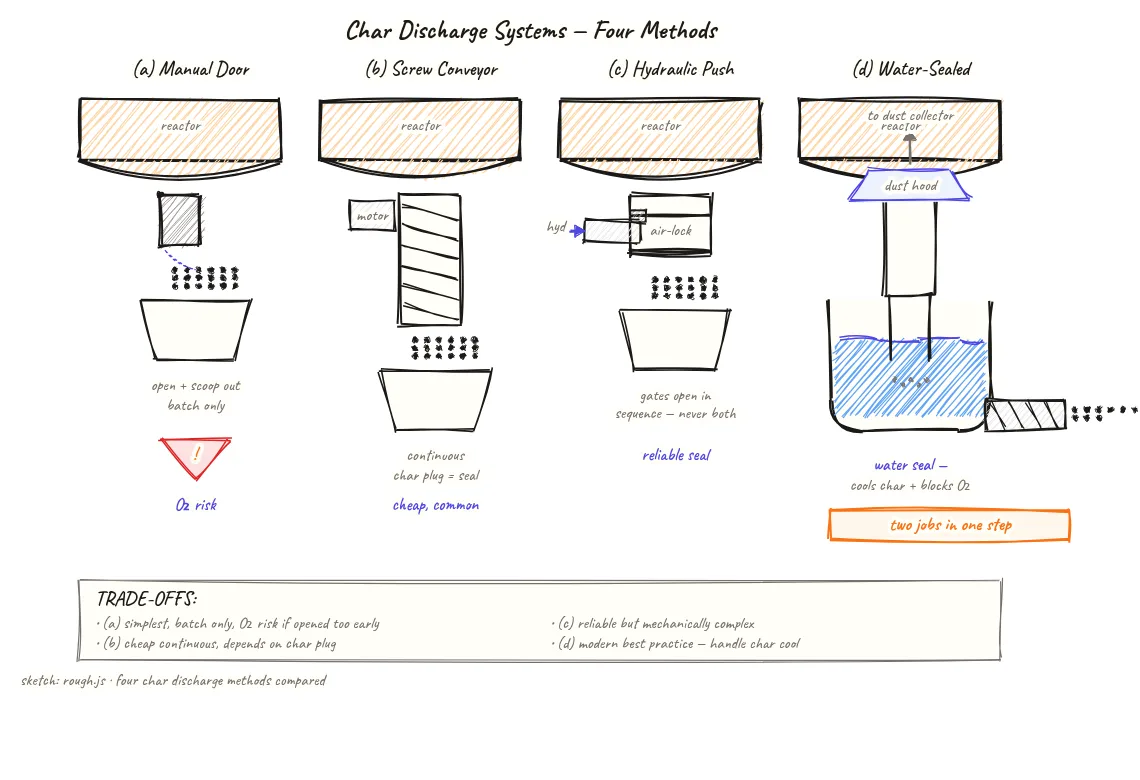
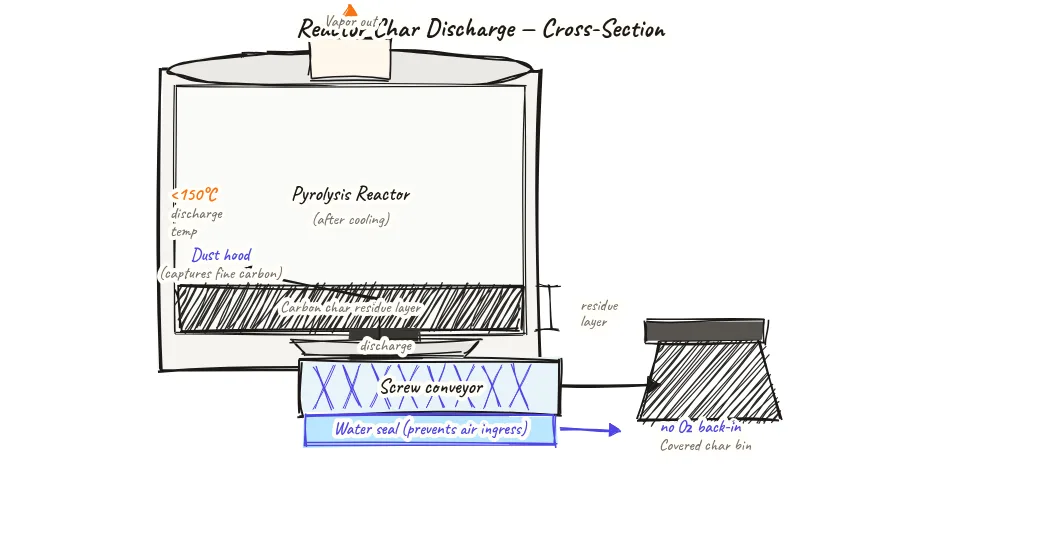
Carbon char from a pyrolysis batch settles at the reactor bottom and is discharged via a sealed screw conveyor after the reactor cools below 150°C — preventing reignition and containing combustible char dust during transfer to the collection bin.
Beyond definitions
Planning to start a Plastic Pyrolysis business?
Get the full business understanding — capex, regulations, machinery, vendor questions, and risk checks before you commit capital.
How to read this sketch
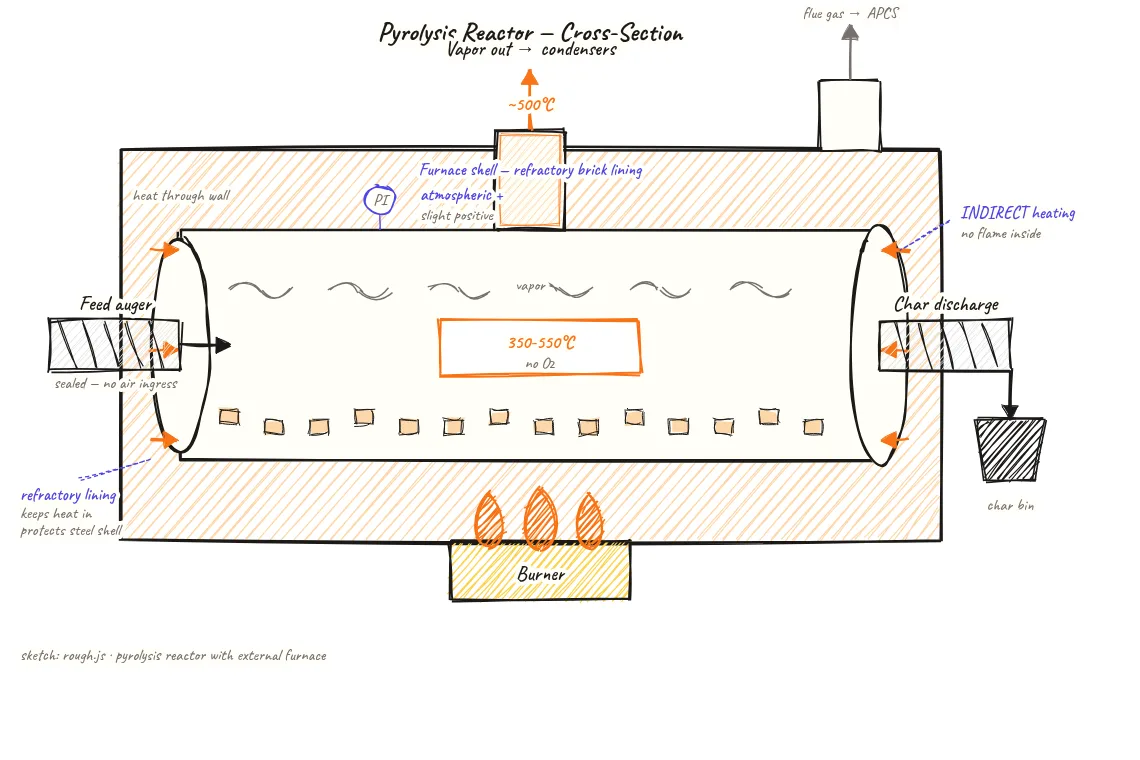
This is a cross-section of the reactor's lower section and the char discharge system. Read it from top to bottom:
- Reactor bottom (top of diagram): The sloped or flat reactor floor with char accumulated as a dark mass.
- Bottom outlet: Sealed port at the reactor base where char exits into the screw conveyor housing.
- Screw conveyor (horizontal): Enclosed screw moves char from the reactor outlet to the collection point. Rotation direction shown by curved arrows.
- Collection bin (right end): Char drops into the bin. Dust hood over the discharge point traps fine dust.
- Temperature label: Below 150°C — the safe discharge threshold before starting the screw.
About this sketch
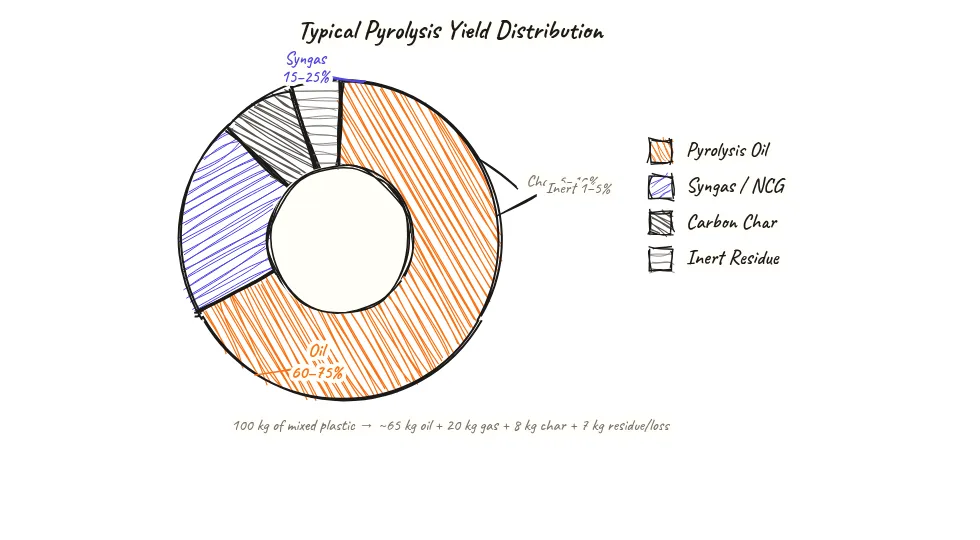
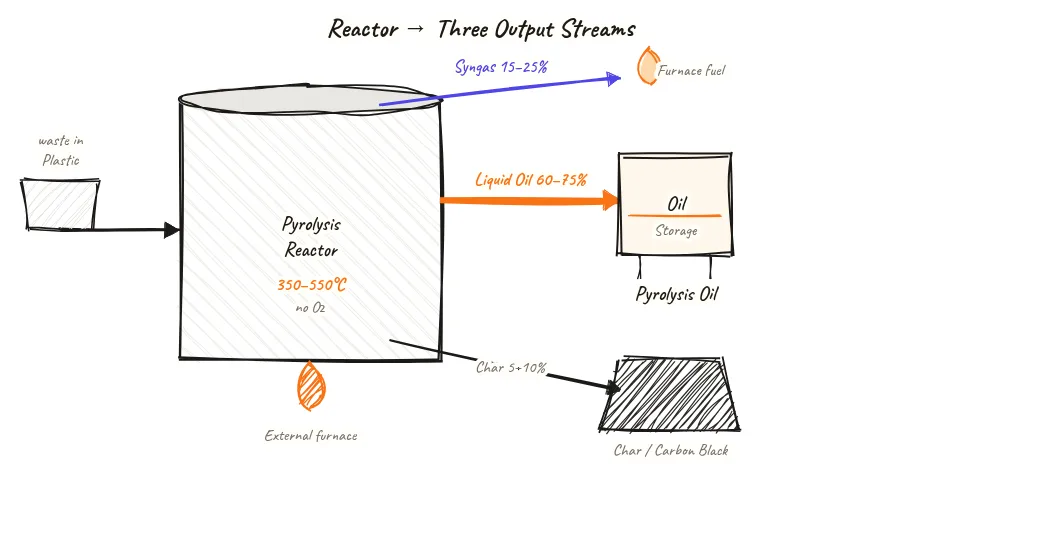
Carbon char is the solid product that accumulates at the reactor bottom during every pyrolysis batch. It cannot be removed while the reactor is hot — carbon char is pyrophoric at elevated temperatures and will spontaneously ignite on contact with air above approximately 150°C. Handling this material safely requires both a temperature gate and a physical seal against oxygen.
As the batch progresses, char builds up progressively at the reactor floor. At the end of the cracking cycle, the furnace is shut down and the reactor is allowed to cool. Most small batch plants cool naturally (2–4 hours to reach below 150°C), while some operators use a slow nitrogen purge to accelerate cooling while maintaining the inert atmosphere.
Once the reactor temperature sensor (TT at the reactor wall or bottom) confirms below 150°C, the sealed screw conveyor can be started. The screw rotates inside an enclosed housing connected directly to the reactor bottom outlet — maintaining a physical seal that prevents air from entering the reactor while char is being moved out. Char exits the screw housing into a collection bin below, typically a steel skip or FIBC (flexible bulk container) with a dust hood over the discharge point to contain fine char particles.
Char at this point is still warm (50–100°C) and has significant fine dust content. The dust is combustible — an open char discharge without a dust hood and a sealed transfer system can accumulate combustible dust concentrations above the lower explosive limit (LEL). Indian plants with dust-related incidents have typically been those with open manual discharge without dust containment. The diagram emphasises the dust hood and sealing requirement at the discharge point.
Key insights
- Char must cool below 150°C before discharge — above this temperature, char in contact with air can spontaneously ignite (pyrophoric reaction).
- The sealed screw conveyor maintains a physical oxygen barrier between the still-warm reactor interior and the outside environment during char removal.
- Char dust is combustible — collection bins and discharge points must be enclosed with dust hoods to prevent dust accumulation above the lower explosive limit.
- Discharge timing and temperature confirmation are the operator's responsibility — many incidents have involved impatient early discharge when the reactor was still above 200°C.
- Char collected in FIBC bags or steel skips should be stored in a covered, ventilated area away from heat sources until it is transported to the buyer or further processed.