Four Char Discharge Methods
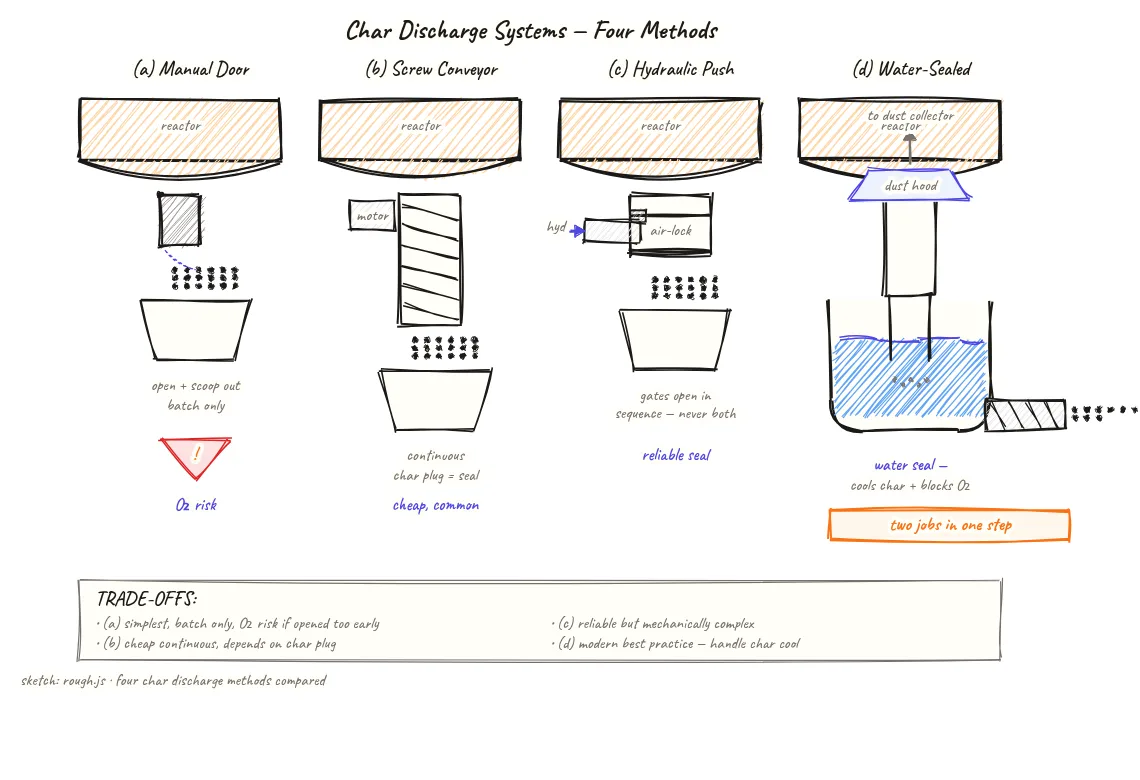
Four different methods for discharging hot carbon char from a pyrolysis reactor — manual door, screw conveyor, hydraulic push, and water-sealed — compared on automation level, oxygen ingress risk, and how they handle dusty hot char safely.
Beyond definitions
Planning to start a Plastic Pyrolysis business?
Get the full business understanding — capex, regulations, machinery, vendor questions, and risk checks before you commit capital.
How to read this sketch
Four panels arranged side by side, each showing a different discharge mechanism in cross-section. Read each panel as follows:
- Panel A (Manual door): A door on the reactor side opens. No mechanical components. Worker icon and char heap below.
- Panel B (Screw conveyor): Enclosed screw below the reactor, with motor on one end and discharge chute at the other. Char flows along the screw flights.
- Panel C (Hydraulic push): Piston on one side of the reactor bottom pushes char through an opening on the opposite side. Hydraulic cylinder and ram shown.
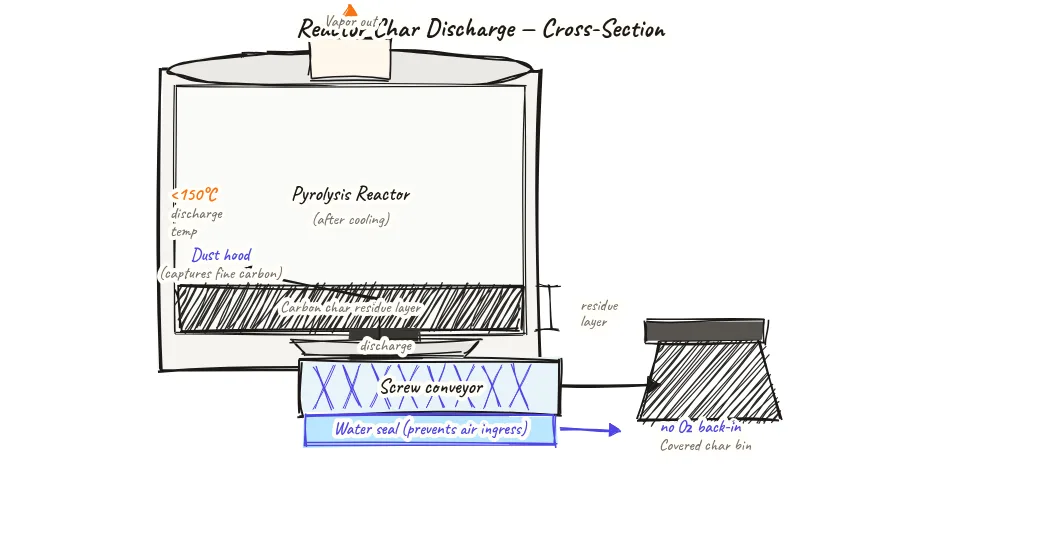
- Panel D (Water-sealed): Drop tube descends from reactor bottom into a water trough. Water level inside the trough provides the oxygen seal. Wet char slurry exits horizontally from the trough side.
- Labels: Dust hood symbol (Panel D), water trough, O₂ block + cooling annotation explain key features of the water-sealed design.
About this sketch
Char discharge is one of the most operationally challenging steps in a pyrolysis batch cycle. The reactor must cool to below 150°C before char can be safely removed — discharging at higher temperatures risks char reignition on contact with air. The discharge method chosen affects worker safety, oxygen ingress risk, dust generation, and how long the overall batch cycle takes.
Manual door discharge (Panel A) is the simplest approach: a hinged door on the reactor front or side is opened after cooling, and workers rake or shovel out the char into bins or bags. This is common in small batch plants (1–3 TPD) where automation cost cannot be justified, but it exposes workers to residual char dust (which is a combustible and respiratory hazard), and the time required for full manual discharge adds to the batch cycle time.
Screw conveyor discharge (Panel B) uses an enclosed screw that continuously moves char from the reactor bottom through a sealed housing to a discharge point below. The screw provides a physical seal that limits air ingress while the reactor is at operating temperature (in continuous plants) or during the cool-down phase. Most medium-scale continuous rotary kiln reactors use this method. The main maintenance issue is screw wear from abrasive char particles.
Hydraulic push discharge (Panel C) uses a hydraulic ram or piston to push solid char out of the reactor through a sealed opening. This is common in larger batch reactors where the char cake at the bottom needs a positive force to eject it. The hydraulic seal prevents air ingress during discharge. Less wear-prone than a screw in high-silica or high-inorganic feedstock applications.
Water-sealed discharge (Panel D) drops char from the reactor bottom into a submerged water trough through a sealed drop tube. The water seal completely blocks oxygen ingress, cools the char simultaneously, and captures dust. The wet char slurry exits one side of the trough for dewatering and bagging. This method is the safest for oxygen exclusion and dust control, and is often used in newer Indian plants or where char quality must be preserved (for carbon black applications).
Key insights
- Char must be cooled below 150°C before any discharge method is used — discharging hotter char risks spontaneous reignition on contact with air.
- Water-sealed discharge provides the best oxygen exclusion and dust control simultaneously — especially important when char is sold for carbon black production where cleanliness matters.
- Screw conveyor discharge is the most common method in continuous rotary kiln plants because it handles char removal while the reactor continues operating.
- Manual discharge is only practical for small batch plants (1–3 TPD) — for larger plants, the time and labour cost make automated discharge economically necessary.
- Char dust from all discharge methods is combustible — proper dust collection and enclosure is required regardless of the discharge method chosen.