Two Processing Routes: Dismantling vs Integrated Refining
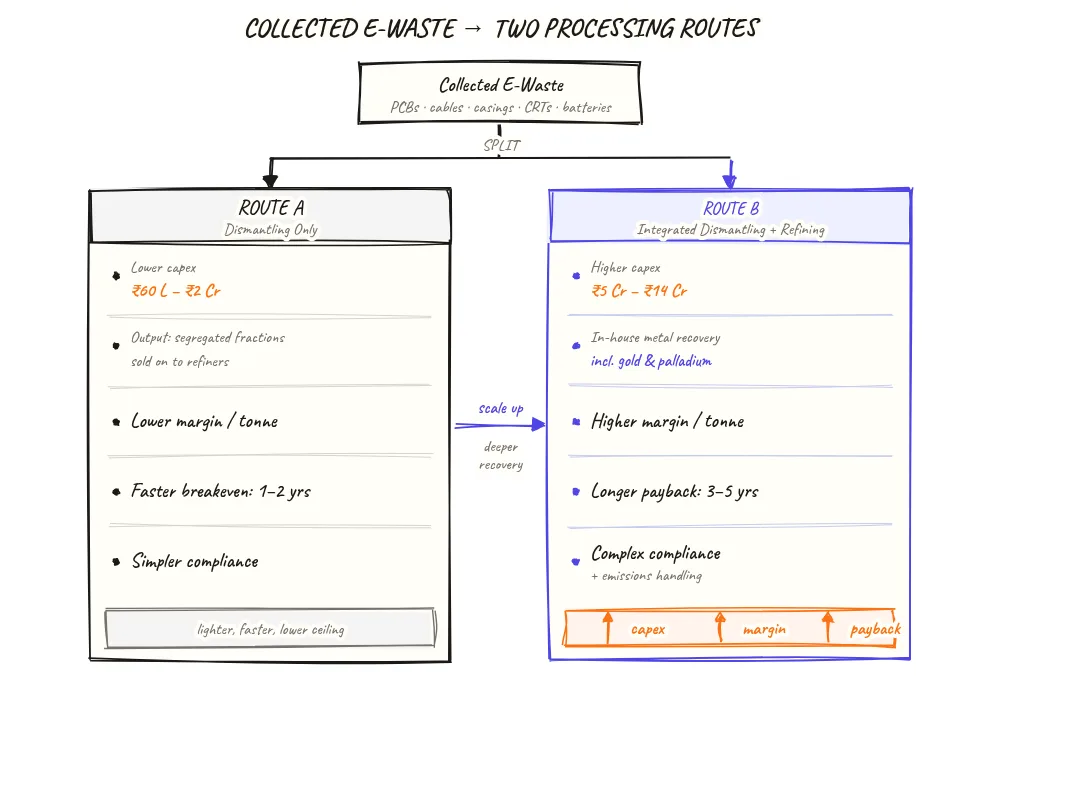
Two routes for an e-waste recycler: dismantle and sell sorted fractions, or refine the metals yourself. The diagram shows how cost, margin and payback shift as you go deeper.
Beyond definitions
Planning to start a E-waste business?
Get the full business understanding — capex, regulations, machinery, vendor questions, and risk checks before you commit capital.
How to read this sketch
- Top box — the single "Collected E-Waste" input that both routes start from.
- Left column (Route A) — dismantling only; arrows lead to segregated fractions sold to outside refiners.
- Right column (Route B) — dismantling plus in-house refining; arrows lead to recovered metals including gold and palladium.
- Trade-off strip (bottom) — the three up-arrows summarise how capex, margin and payback all increase as you move from Route A to Route B.
About this sketch
Every e-waste recycler in India faces one early fork in the road, and this diagram lays it out side by side. Collected e-waste can take one of two processing routes. The choice decides how much you spend to start, how much value you keep per tonne, and how long before the plant pays for itself.
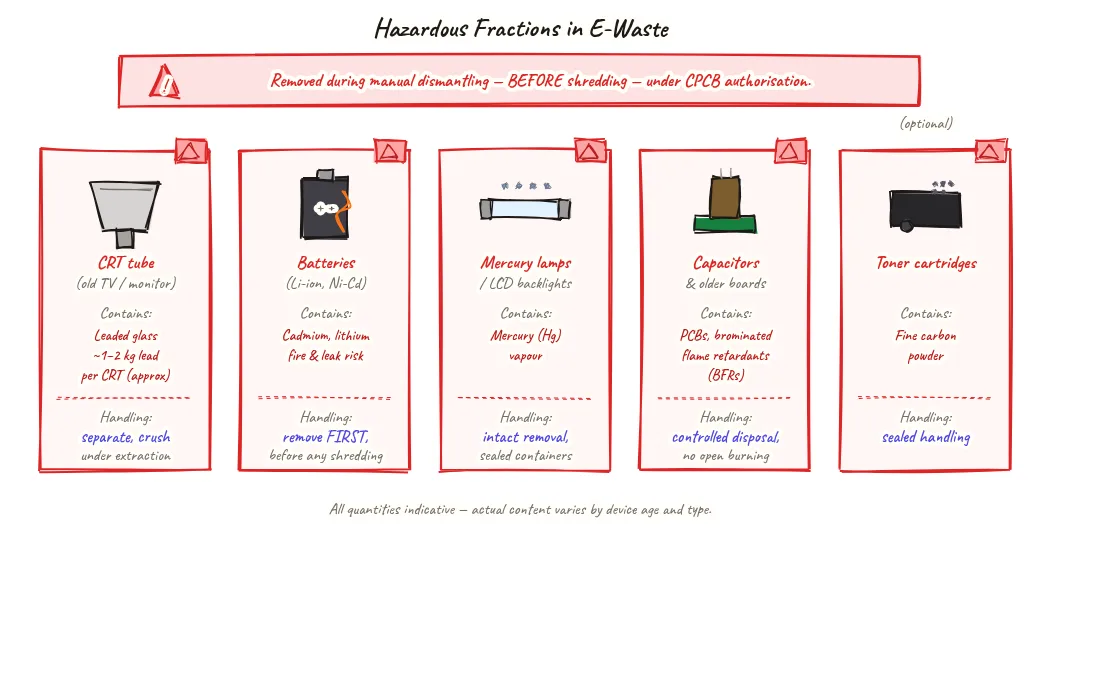
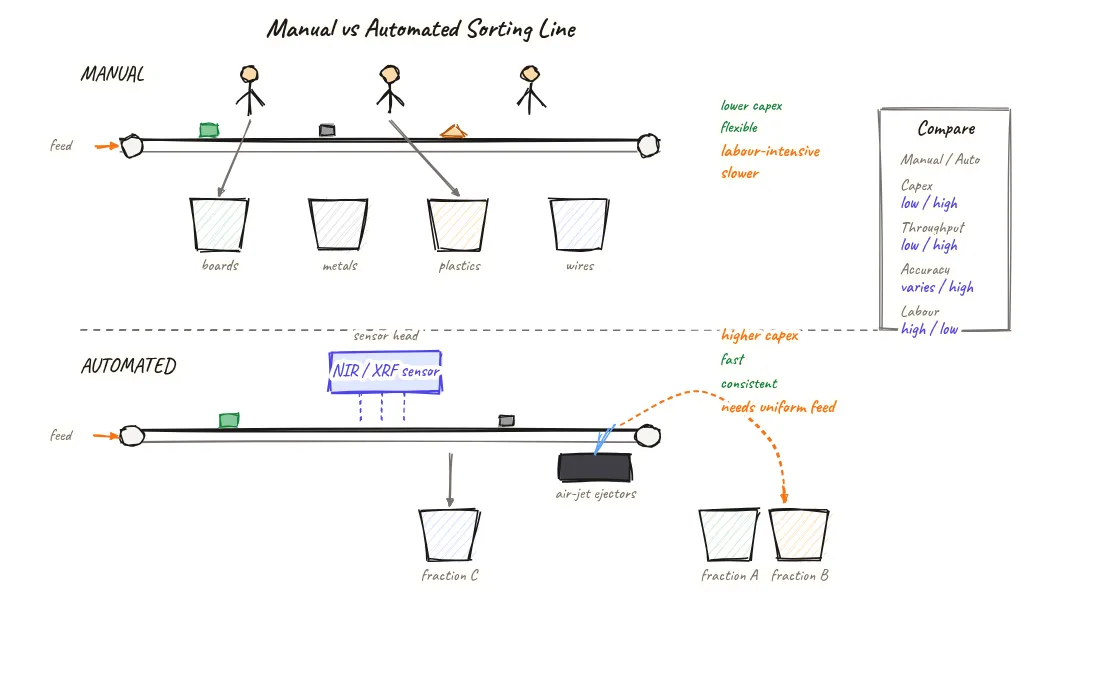
Route A — dismantling only. Devices are taken apart by hand and machine into clean fractions: circuit boards, cables, plastics, ferrous and non-ferrous metal, and hazardous parts. Those fractions are sold on to refiners rather than processed further. The upside is a lower starting cost, a faster breakeven of roughly one to two years, and far simpler compliance because you are not running furnaces or chemical baths. The trade-off is a thinner margin per tonne — the refiner who buys the fractions captures the value locked inside the boards.
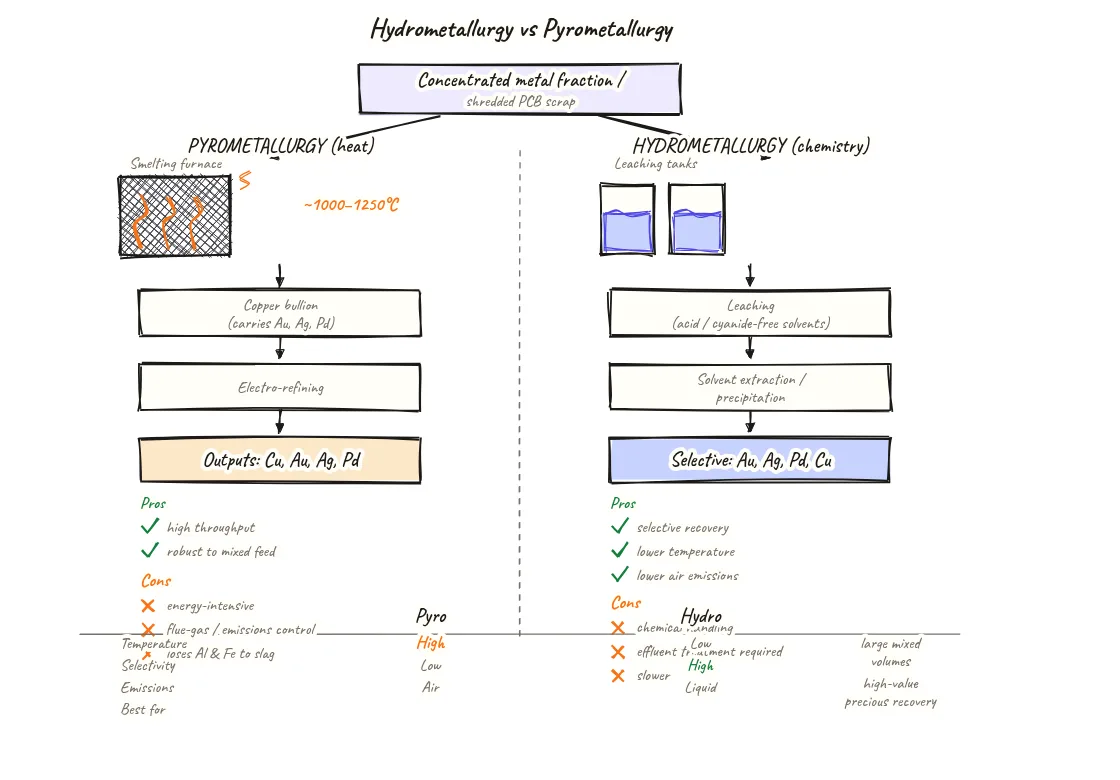
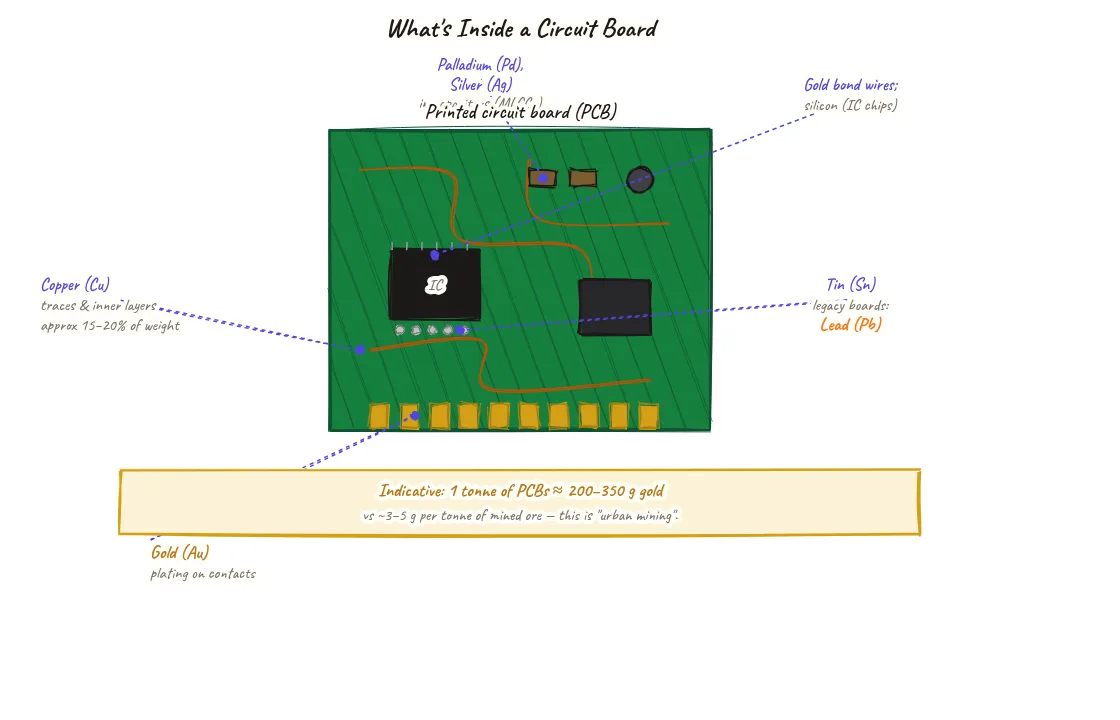
Route B — integrated dismantling plus refining. Here the recycler keeps the boards and recovers the metals in-house, including the precious metals that make e-waste worth chasing: gold, palladium and platinum-group metals alongside copper. Margin per tonne climbs sharply because you capture the full value of the material. But the entry cost is many times higher, the payback stretches to three to five years, and the compliance load grows — you now handle furnace or leaching emissions and the heavier permitting that comes with metal refining.
The trade-off strip at the bottom reads the whole picture in one line: moving from Route A to Route B, capex rises, margin rises, and payback rises together. Most Indian operators begin as authorised dismantlers under the E-Waste (Management) Rules, 2022, then add refining only once collection volumes and capital allow it. The diagram is meant to help a new entrant size up which route fits their funding and risk appetite before committing.
Key insights
- Route A (dismantle and sell fractions) has the lowest entry cost and the fastest breakeven, but the thinnest margin per tonne.
- Route B (refine metals in-house) captures the full value of precious metals like gold and palladium, lifting margin sharply.
- Going from Route A to Route B raises capex, margin and payback all at once — higher reward, longer wait, more compliance.
- Dismantling carries far simpler compliance; refining adds furnace or chemical emissions handling and heavier permitting.
- Most Indian recyclers start as dismantlers and add refining later, once collection volumes justify the extra capital.